The room

Four hours,
once a month.

A term is five sessions — one afternoon a month, 2:30 to 6:30. That’s the whole footprint. Here is an entire session, minute by minute; there is dinner in the middle of it.

View a full session schedule 2:30 — 6:30 PM
  1. 2:30Prayer & Welcome10 min
  2. 2:40Cold Open / Business Challenge / Elevator Pitch15 min
  3. 2:55Speaker Session40 min
  4. 3:35Break10 min
  5. 3:45Interactive Activity / Workshop25 min
  6. 4:10Debrief & Speaker Q&A15 min
  7. 4:25Dinner & Networking15 min
  8. 4:40Speaker Session40 min
  9. 5:20Interactive Activity / Workshop25 min
  10. 5:45Debrief & Speaker Q&A15 min
  11. 6:00Team Work / Case Competition Application25 min
  12. 6:25Closing & Next Steps5 min

Q&A comes after you’ve built the thing, not after the talk. Students don’t have questions after a talk. They have questions after they’ve tried it and failed at it.

The schedule is a recommended framework rather than a rigid agenda — segments flex to fit the speaker, the activity, and the room.

Once a month is the design, not a limitation. DBI wants athletes, musicians, actors, volunteers — students with full lives. The institute is built to support the rest of your life, not replace it. Play your season. Do the musical. Keep your job.

Don’t mistake the cadence for casualness. Inside those four hours you build, defend, and get judged, and the homework between sessions is graded on your reasoning, not your guesses. Small footprint. Full weight.

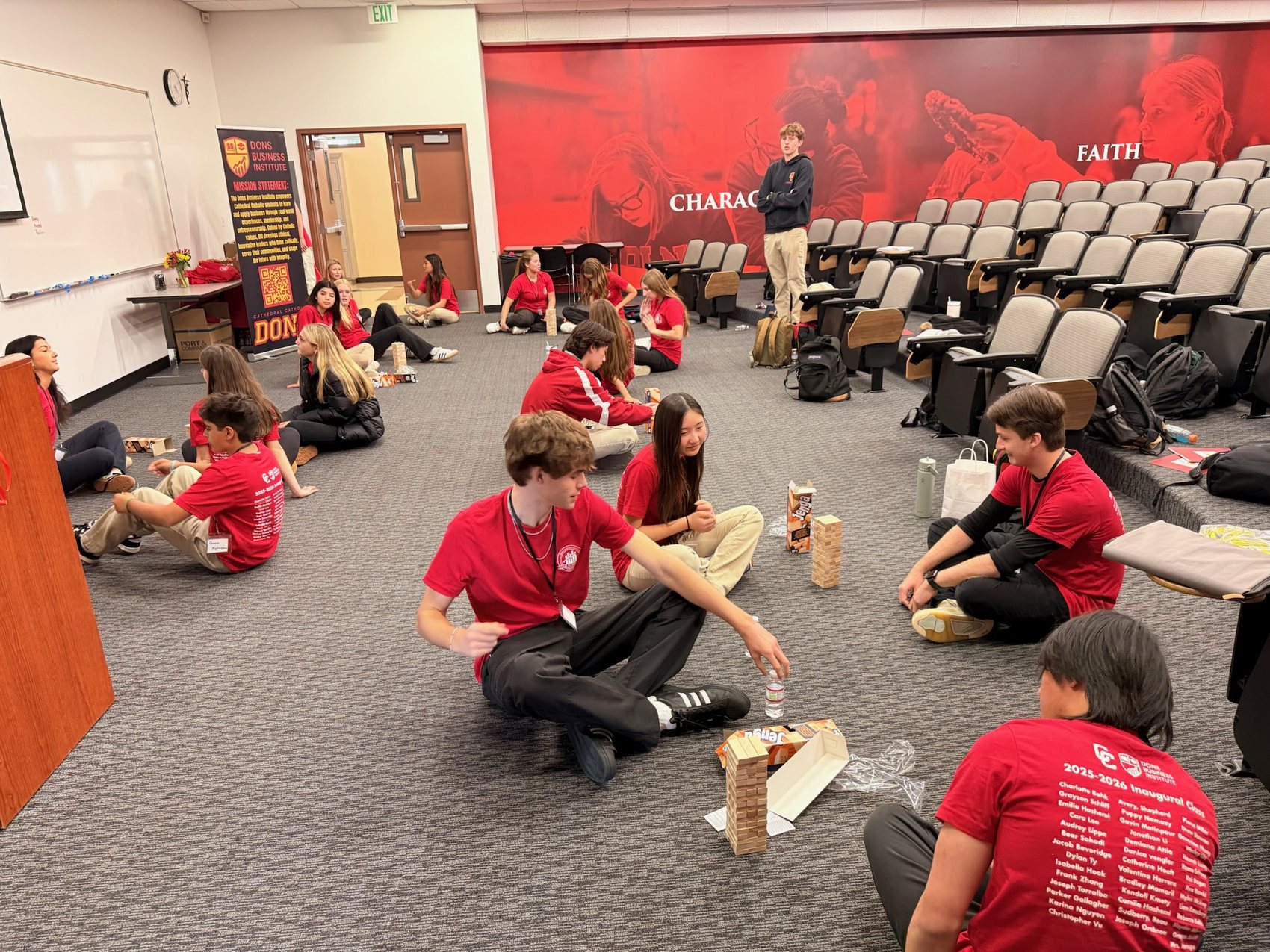
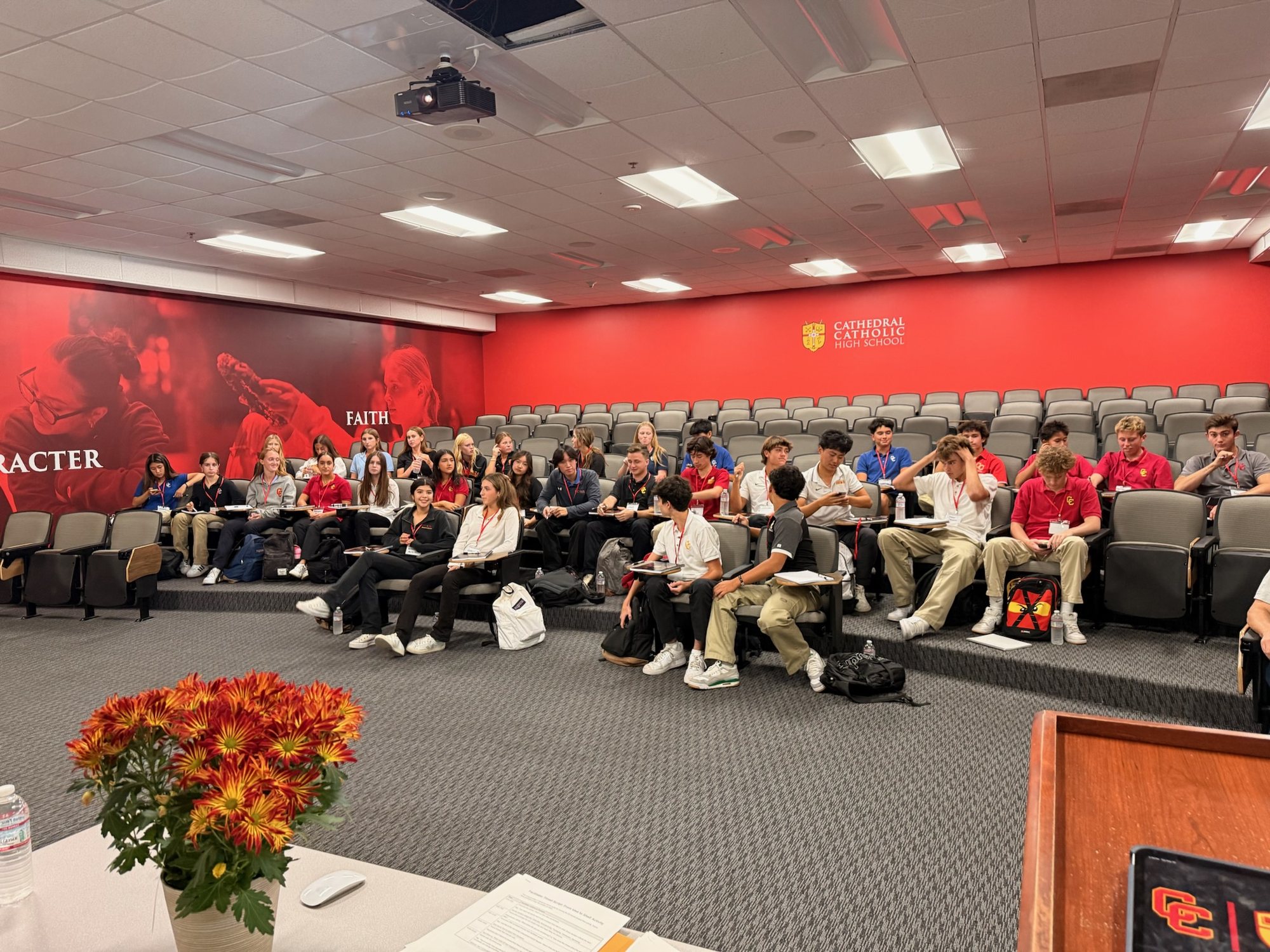
The DBI cohort seated in a Cathedral Catholic lecture hall beneath banners reading CHARACTER and FAITH.
Session one. Under the banners that were already on the wall.
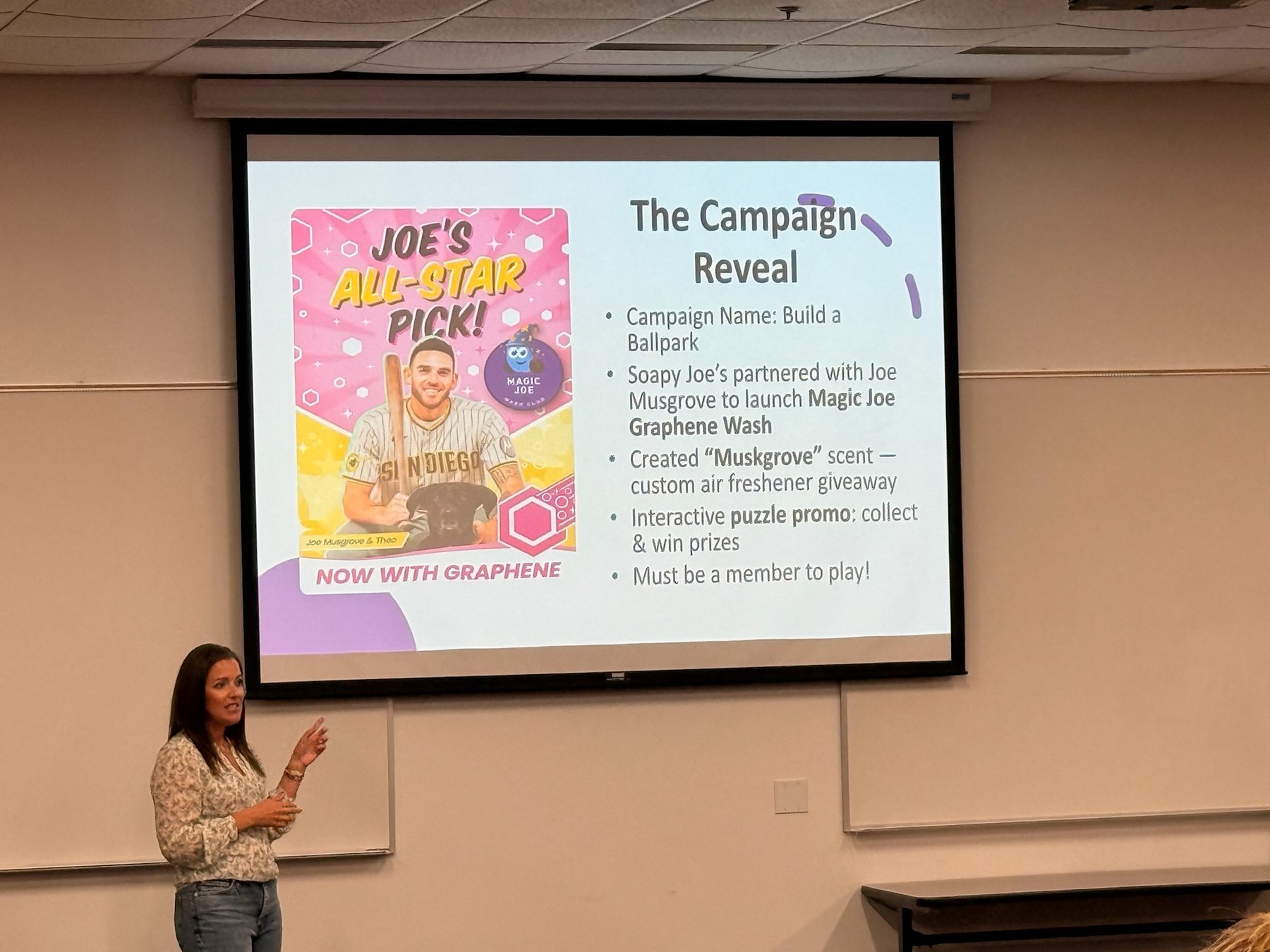
Krista Moffett presenting a Soapy Joe's campaign slide featuring a Joe Musgrove trading card promotion.
Krista Moffett presenting her influencer marketing campaigns for Soapy Joe’s — the brief the students then worked themselves.

Say no

Your team runs a five-location boba chain. Ten investment chips, twelve things you could spend them on. Pick exactly three. Then name two things you are choosing to be bad at, and defend it to a hostile board member who asks one question: “What did you give up, and why was that okay?”

Teams who say they didn’t really give up anything score zero.
The burrito line

Your team is an assembly line. Tortillas are paper circles, rice is white strips, salsa is green dots. A QC inspector rejects anything off-spec. Run it once badly, find your bottleneck, redesign it, run it again.

Then ownership changes the spec mid-run. That’s inventory risk, and nobody forgets it.

What you actually did Monday

Every speaker is required to spend two minutes on what they literally did last Monday morning. Concrete. Not the LinkedIn version.

It is the single most valuable two minutes of any session.

The pathway

One year.
Two very different jobs.

In the fall you learn every part of how a business runs, then fix a real company’s problem. In the spring — if you make the cut — you build your own, as a founder. Here is the whole year, top to bottom.

  1. August

    Applications open

    Online application, then interviews — around 200 apply for 40 seats. No business background required: selection weighs curiosity, follow-through, communication and coachability, not who your family knows.

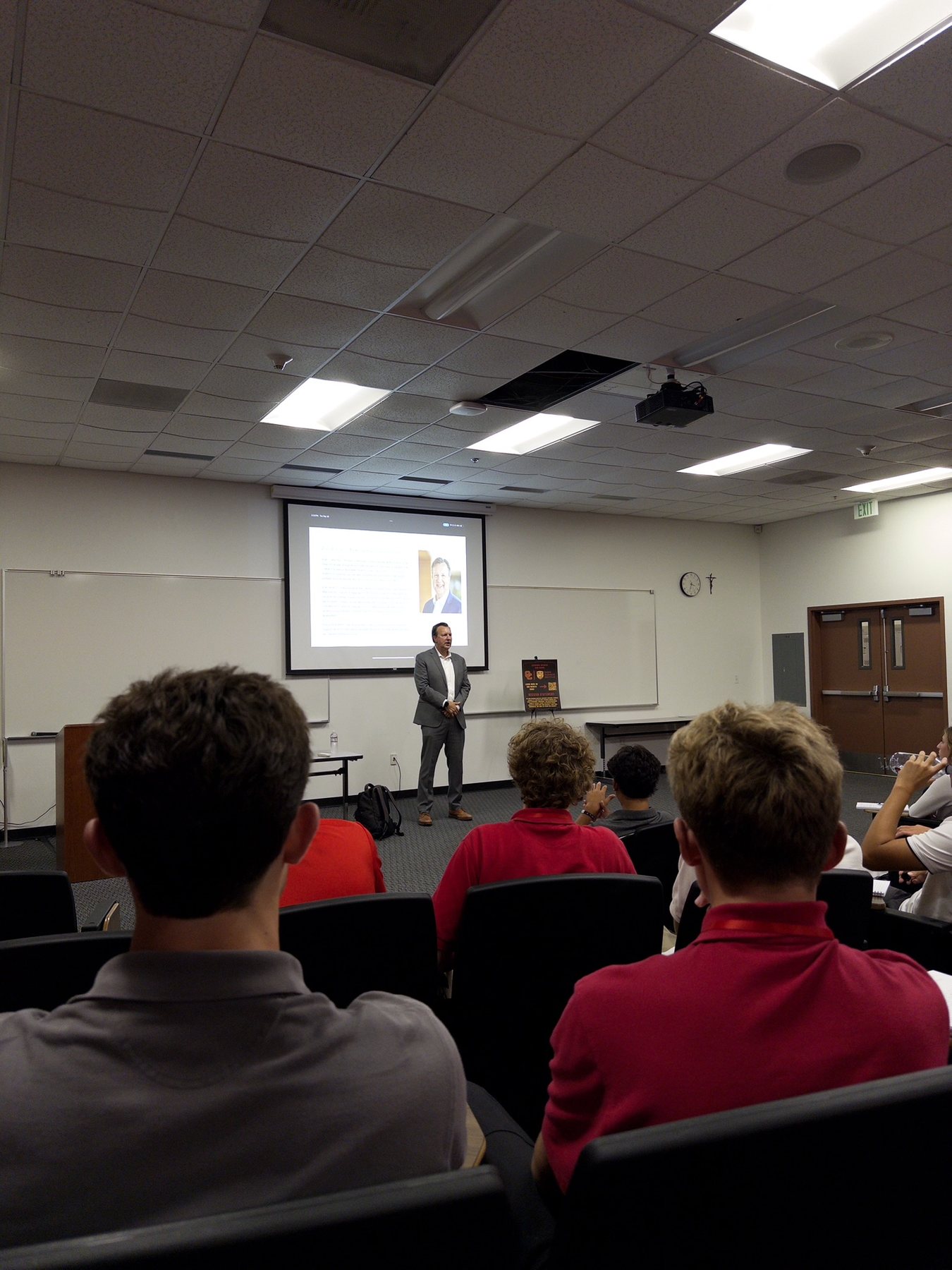
    An industry speaker presenting to DBI students in red polos, a crucifix on the classroom wall.
    What you’re applying for: a room where someone who does this for a living is talking to you.
  2. September — December · Term one · Intro to Business

    You are a generalist.

    Five sessions, one afternoon a month — each one a different lens on how a business actually runs, taught by people who do it for a living. Mid-semester, case teams form and get mentors; every session after that ends with your team applying the lens to the case.

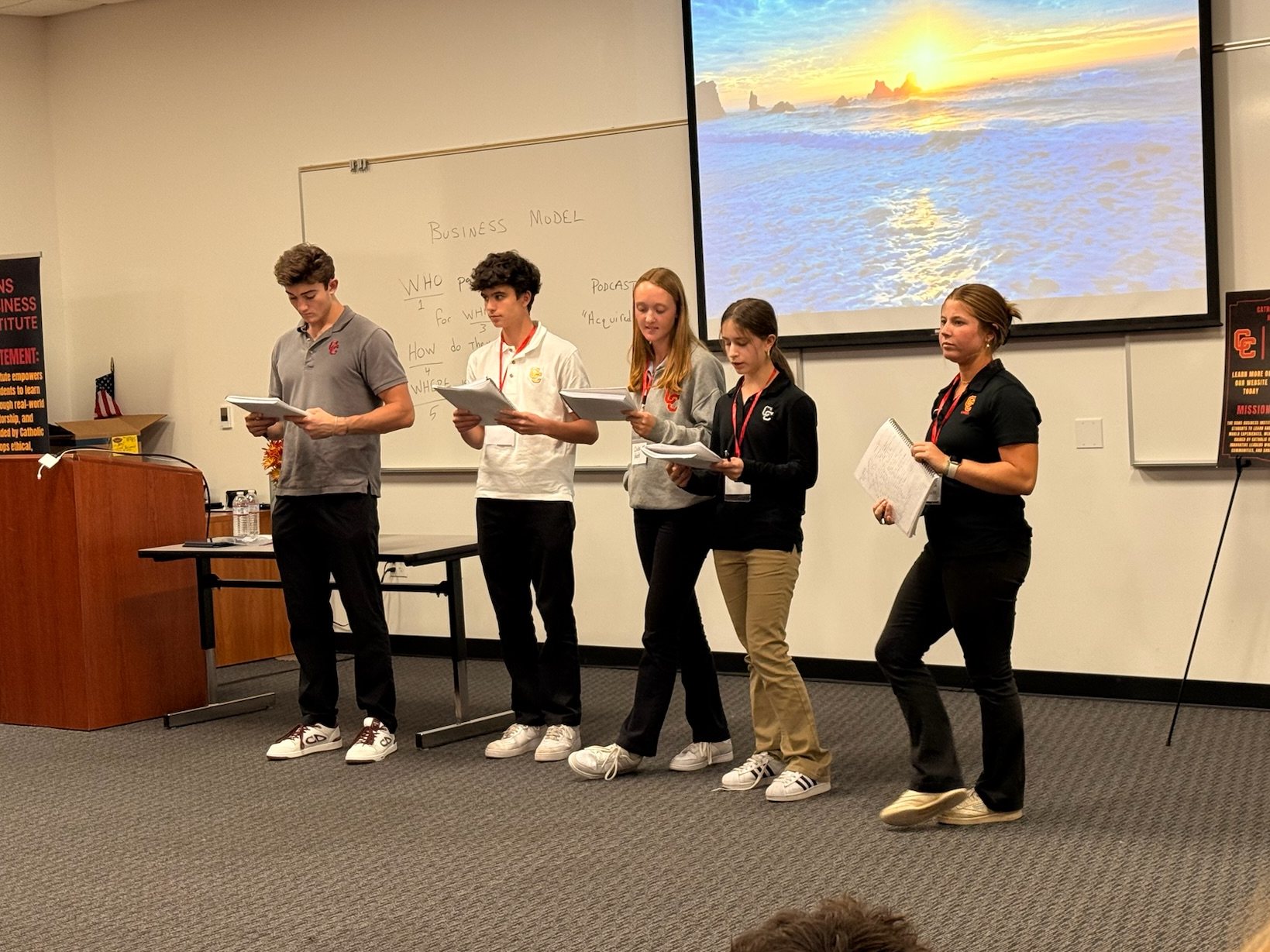
    Five students presenting at the front of the room, a sunset slide on the screen and a business model sketched on the whiteboard.
    Team presentations — the whiteboard behind them says “business model,” because they just built one.
  3. Session 01

    Finance & Artificial Intelligence

    Using data and technology to make better business decisions.

    Read the three financial statements, price a product, find breakeven — then learn where AI actually earns its keep in a business. The session ends analyzing a struggling company using both.

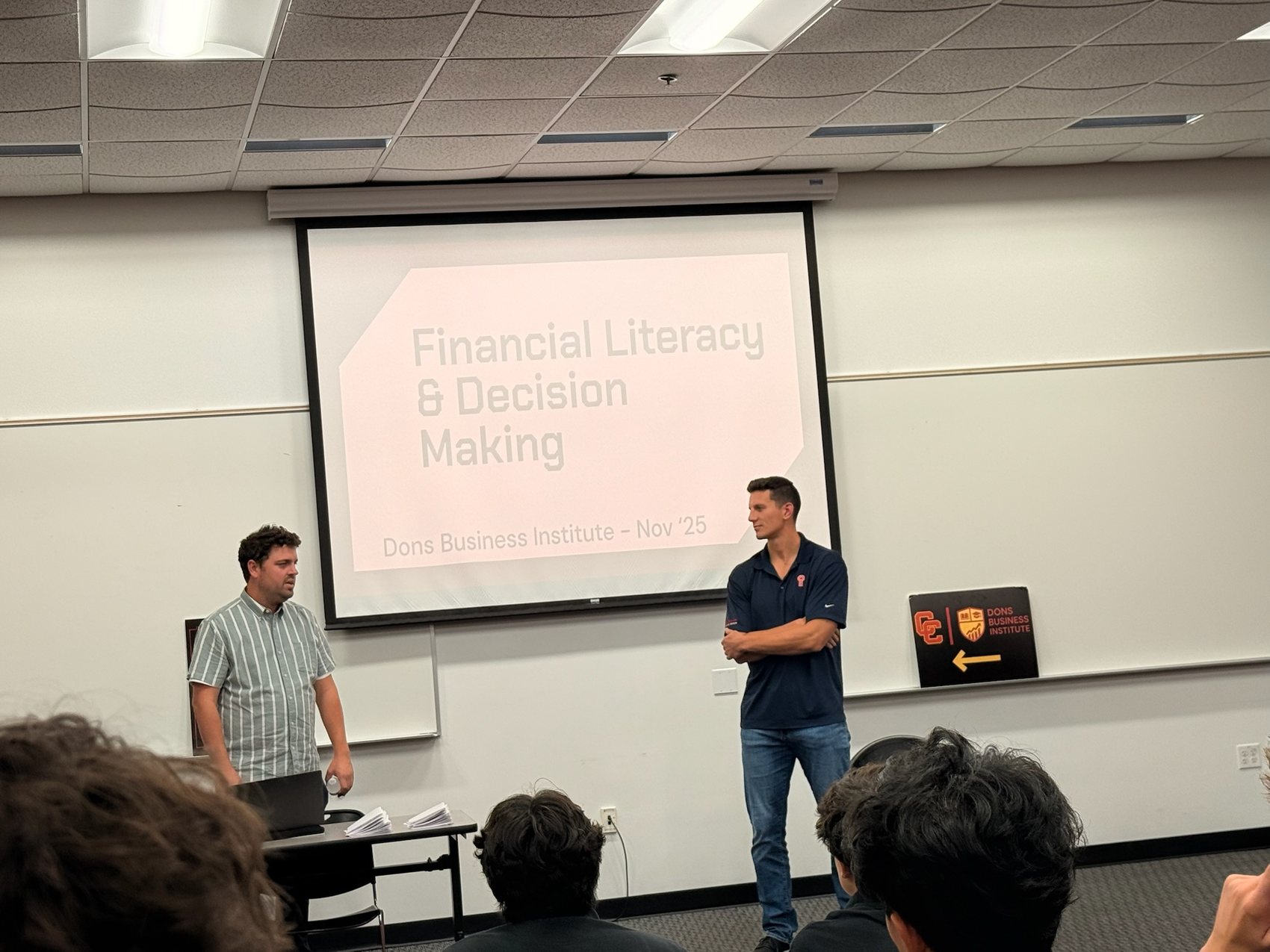
    Two speakers presenting a Financial Literacy and Decision Making session to DBI students.
    “Financial Literacy & Decision Making” — the November session.
  4. Session 02

    Strategy & Operations

    Building a business that can grow and execute.

    What makes an advantage survivable — moats, positioning, choosing your market — and then the unglamorous machinery that keeps promises: supply chains, bottlenecks, quality. Teams redesign a real company’s operations.

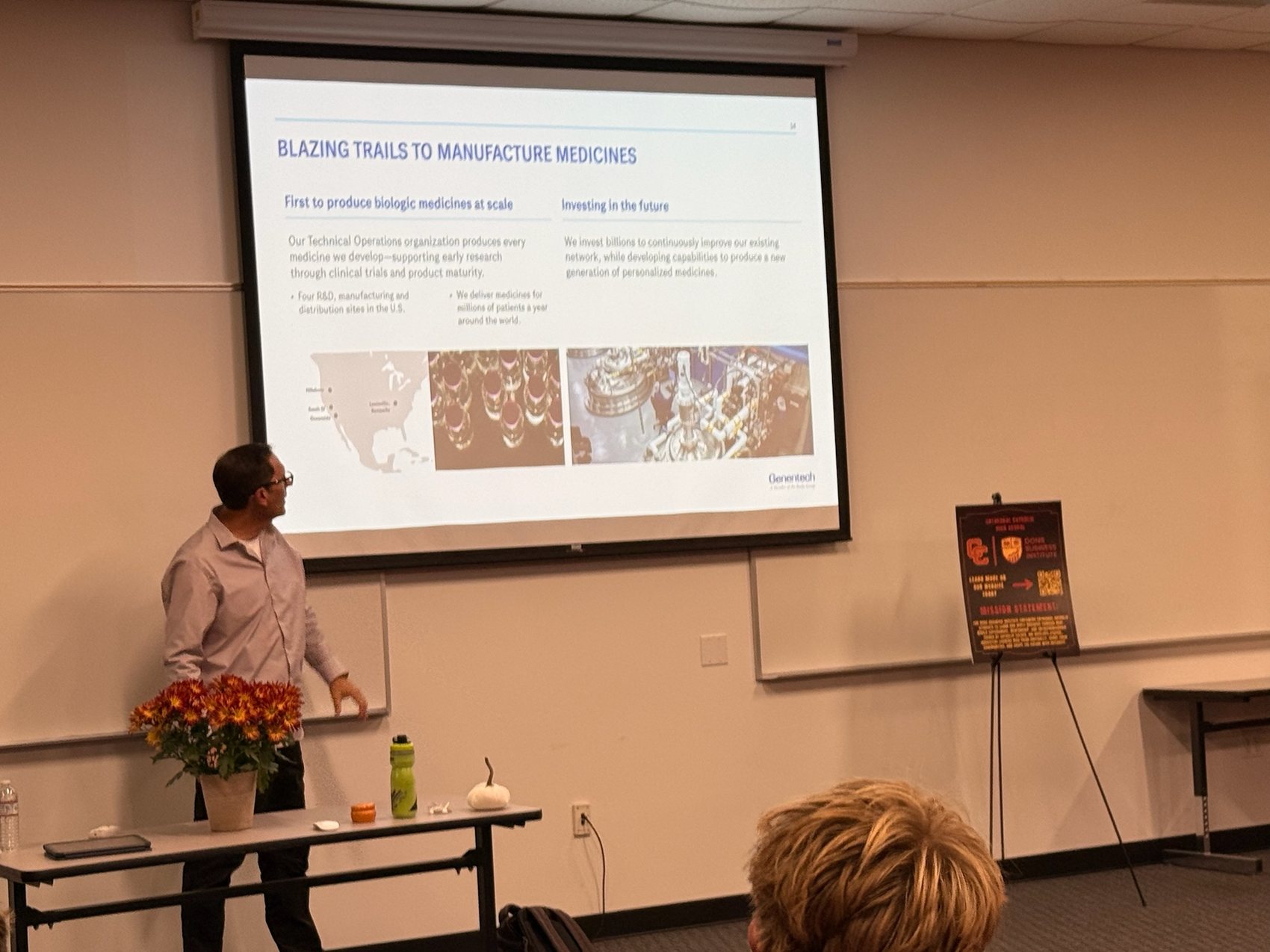
    Chris LeTourneau of Genentech pointing to a manufacturing slide titled Blazing Trails to Manufacture Medicines.
    Chris LeTourneau, Head of Manufacturing Operations at Genentech Oceanside, on producing medicine at scale.
  5. Session 03

    Marketing, Sales & Human Resources

    Building relationships with customers and teams.

    Branding, personas, and funnels — why everything a company posts is aimed at someone. Selling as diagnosis, not persuasion. And the hires and culture calls that quietly decide everything else.

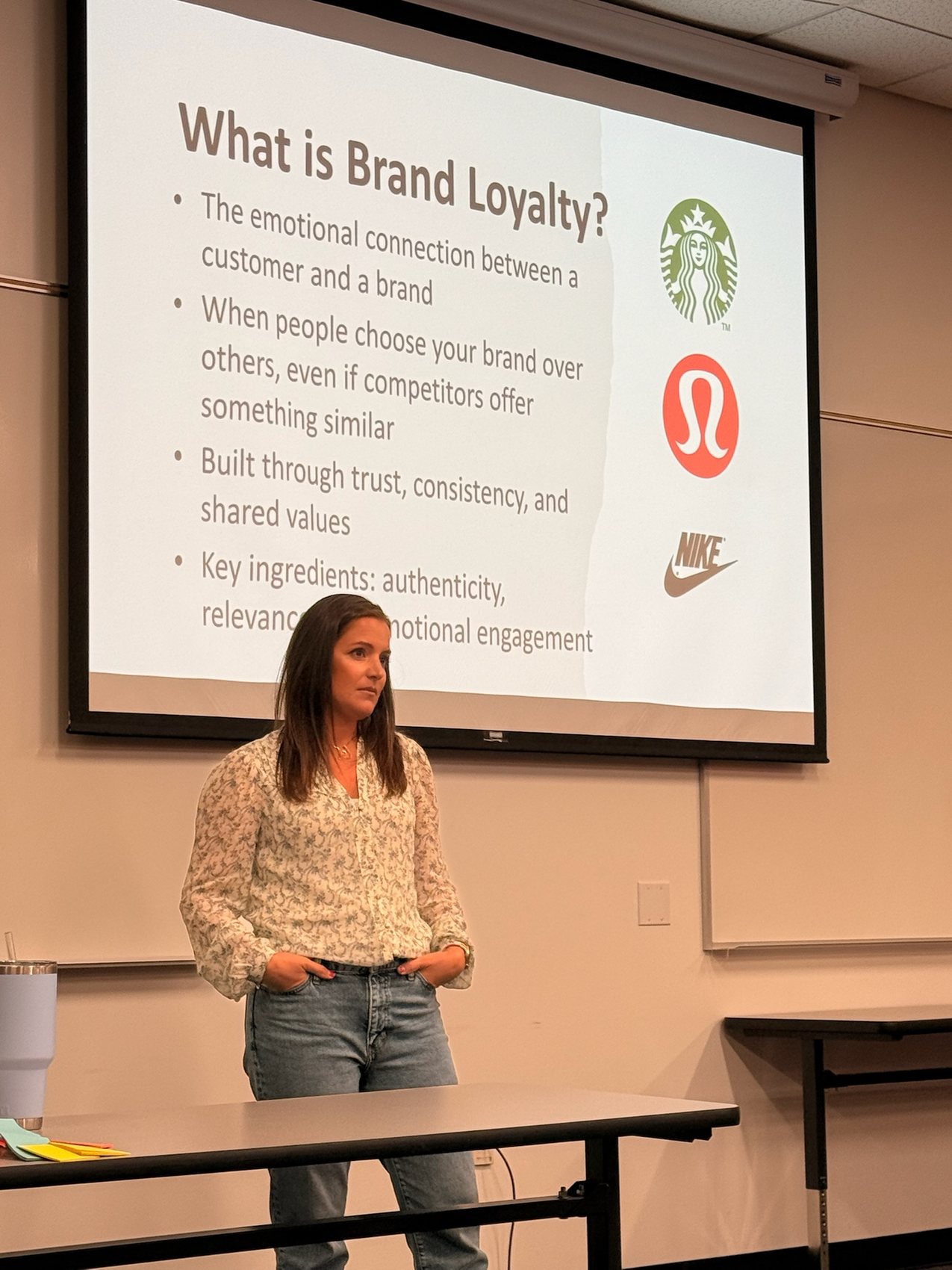
    Krista Moffett presenting a slide asking What is Brand Loyalty, with Starbucks, Lululemon and Nike logos.
    What is brand loyalty? Krista Moffett, on why you choose what you choose.
  6. Session 04

    Executive Communication & Presentation Workshop

    Say it like someone who owns the answer.

    Structure an argument, build the deck, deliver it standing up — and survive the questions that come after. It’s the rehearsal for what comes next: session five isn’t a class at all.

    A student presenting from the podium during a DBI session.
    The podium is the point.

December · The term-one capstone

The Case Competition

A real company hands you a problem it actually has, and you defend a recommendation to the people who own it — on stage. In 2025 Surfline brought the brief: “Where would you expand — Indonesia, South Africa, or Brazil?” Eight teams of five worked it like a real engagement: research, strategy, numbers. You do not own this business. You are advising it.

The winning team · Group 6

Genevieve Phung · Drew Dawson · Hayden Wheeler · Poppy Namazy · Pierce Millar

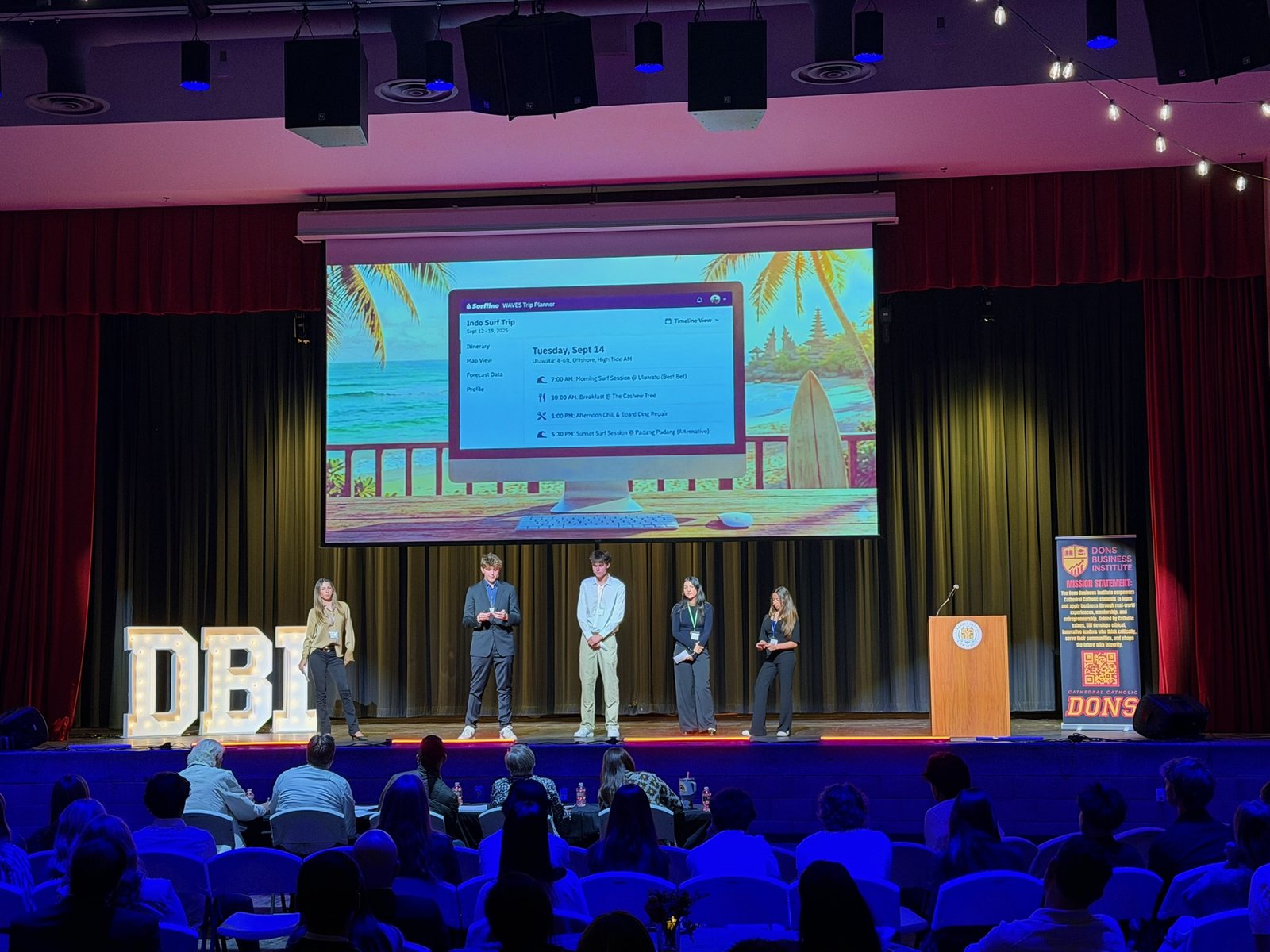
Their answer: Indonesia — not a market to enter, an ecosystem to build. An AI trip-planning engine they called WAVES, a GPS “smart leash” engineered for reef breaks at a 41% hardware margin, and a coaching subscription on top — three revenue streams and a $16.5 million year-one model, defended to Surfline’s own leadership.

8teams of five
3markets on the table
1real company’s decision
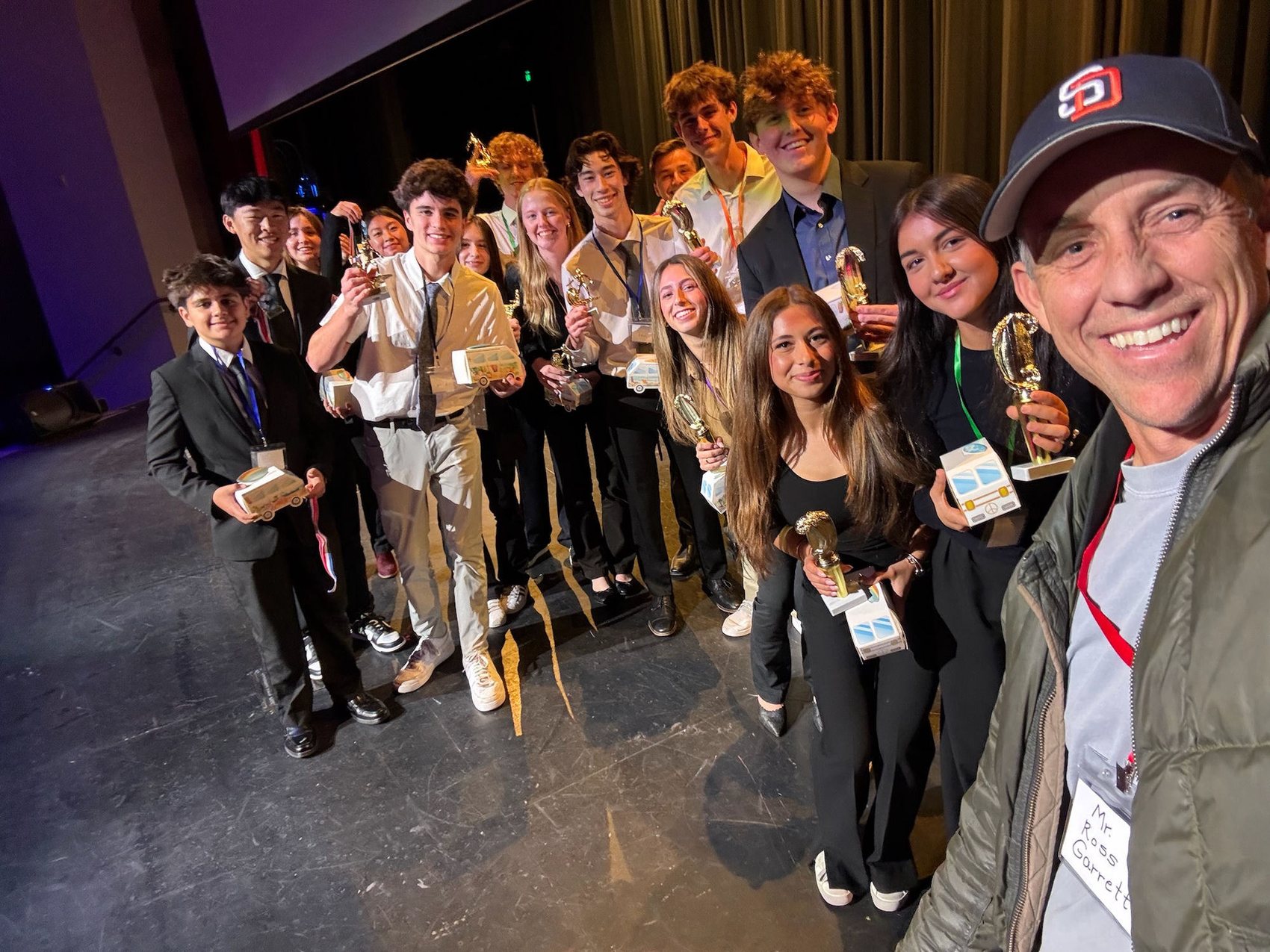
Surfline CEO Ross Garrett takes a selfie with the winning case competition students holding their trophies on stage.
Surfline CEO Ross Garrett’s selfie with the winners, trophies in hand.
The winning team of five on stage presenting the WAVES trip-planner mockup to a full audience.
Group 6, mid-pitch — WAVES on the screen behind them.
  1. January

    The gate

    The fall term is where everyone starts. In January, students who want to build a company reapply for the entrepreneurship term — a pitch and an interview — and 20 of the 40 continue. Preferring the corporate path isn’t held against anyone; the venture term is simply a different job, and it assumes you now know what a unit economic is.

    Now you are a founder.

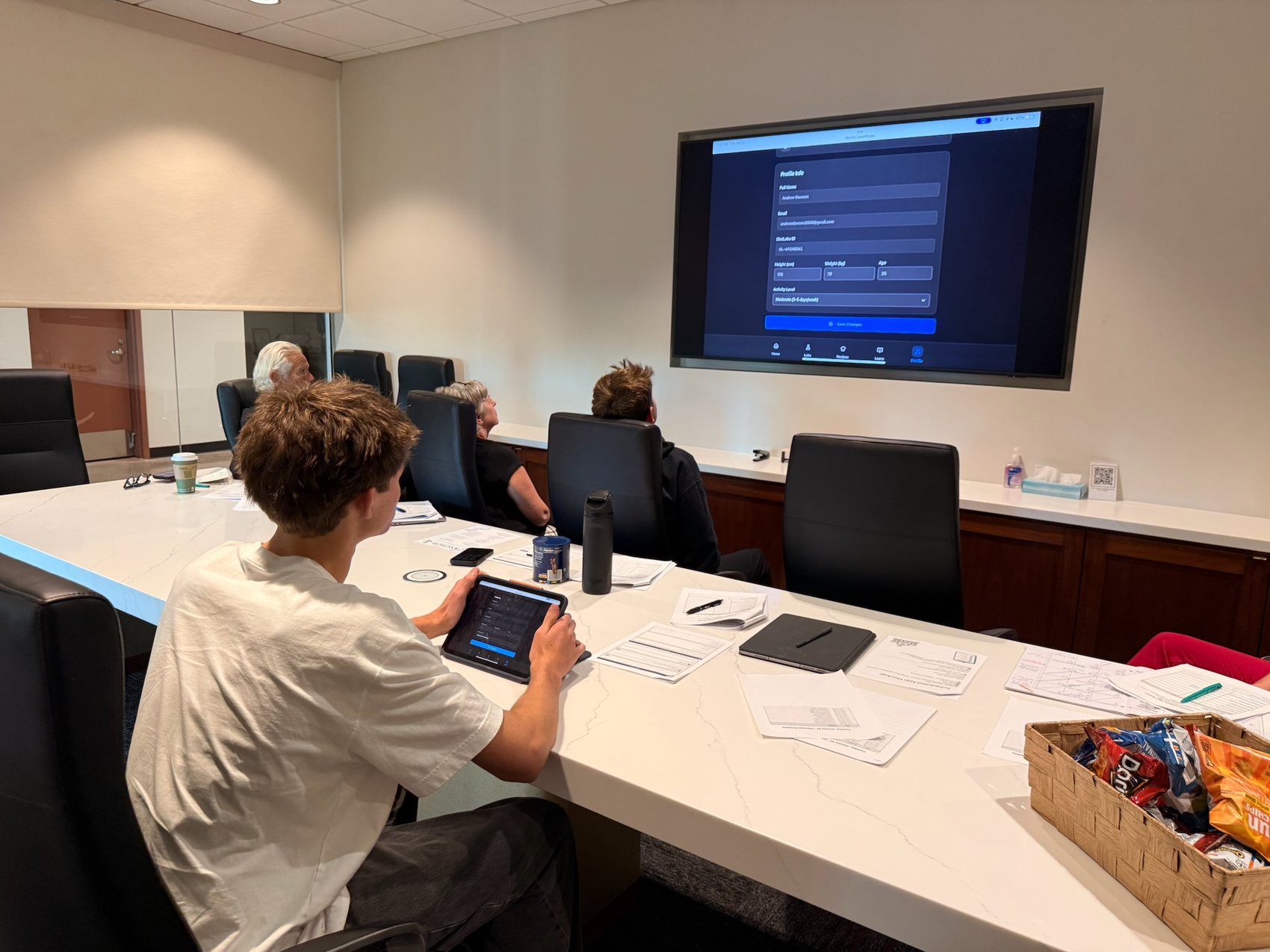
    A student demos the DietLabs app from an iPad while it mirrors onto the boardroom screen for the interview panel.
    The January interviews — Drew walked in with DietLabs already built and demoed it live.
  2. February — May · Term two · Entrepreneurship

    20 ideas go up on the wall.
    10 companies come off it.

    Every idea is taped up and the room reads all of them — then you’re told only ten businesses will be left standing. Students pulled their own paper off the wall to join an idea they believed in more. Each company gets two mentors: an entrepreneur who has scaled a company, and a USD MBA.

    From here, every session is taught by founders — and all of it aims at one night in May.

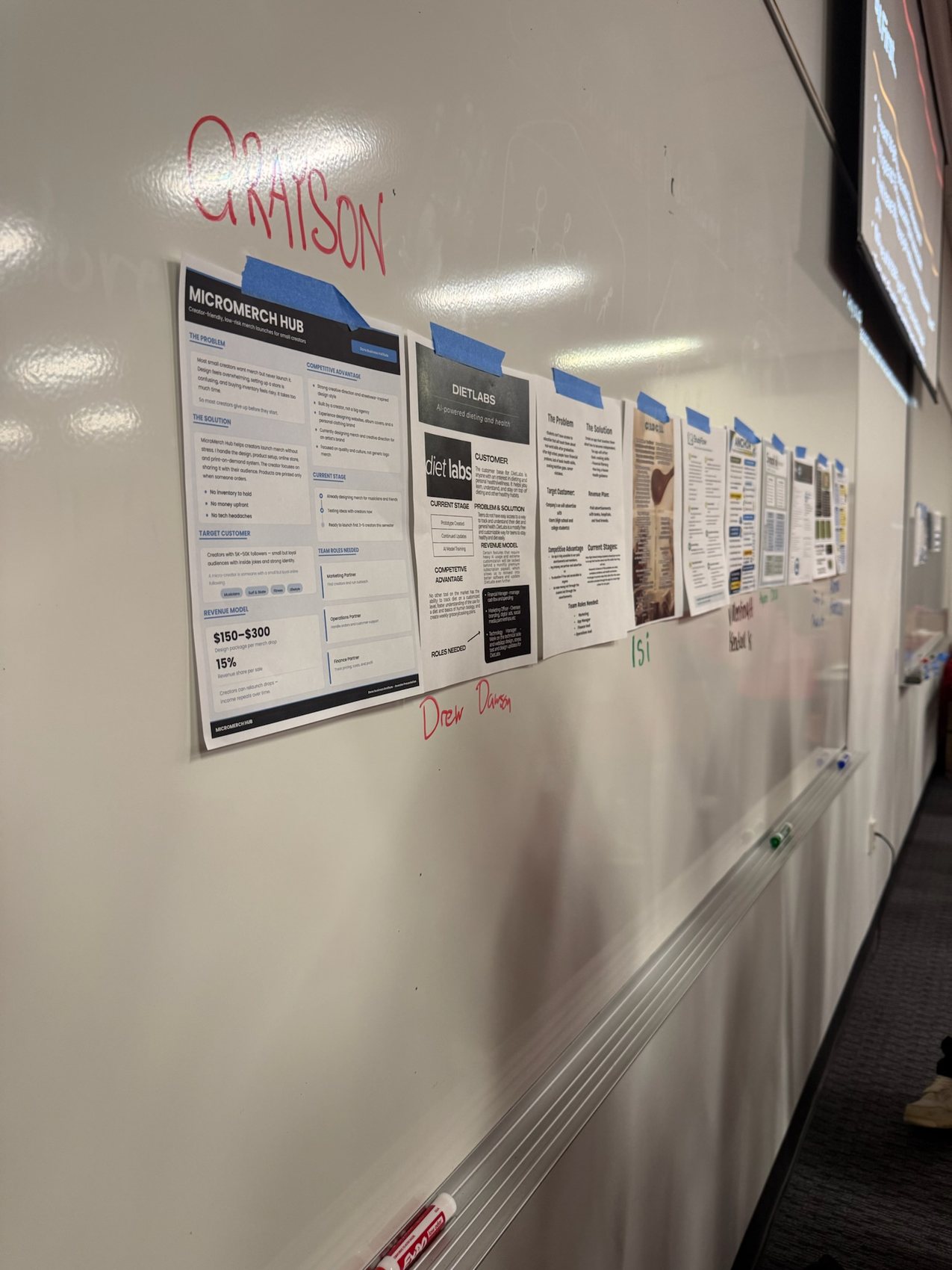
    One-page business overviews taped along a whiteboard, students' names written above them in marker.
    The wall itself — Micromerch Hub, DietLabs, and the rest, taped up with names in marker.
  3. Spring · Session 01

    Three Entrepreneurship Journeys

    You don’t need a perfect idea to start. You need cash reserves to survive.

    Danny Shepherd has founded six companies; he walked teams through three of them — including the eBay air-intake business he started at 18 that Fast & the Furious supercharged and bad credit terms killed. Then the whole room played the Risk Game.

    Students seated in a circle on the floor playing the Risk Game with wooden blocks.
    The Risk Game — pull the block, take the risk.
  4. Spring · Session 02

    Attention & Capital

    Getting known, and getting funded.

    Jessie Rodriguez — from his father’s meat market to HGTV’s Vintage Flip — opened a real flip’s books ($84,000 profit on one Riverside house), then ran a viral-video contest. Adam Seery of Harvest Small Business Finance followed with how capital actually works — and every team applied to “the banker” for a loan.

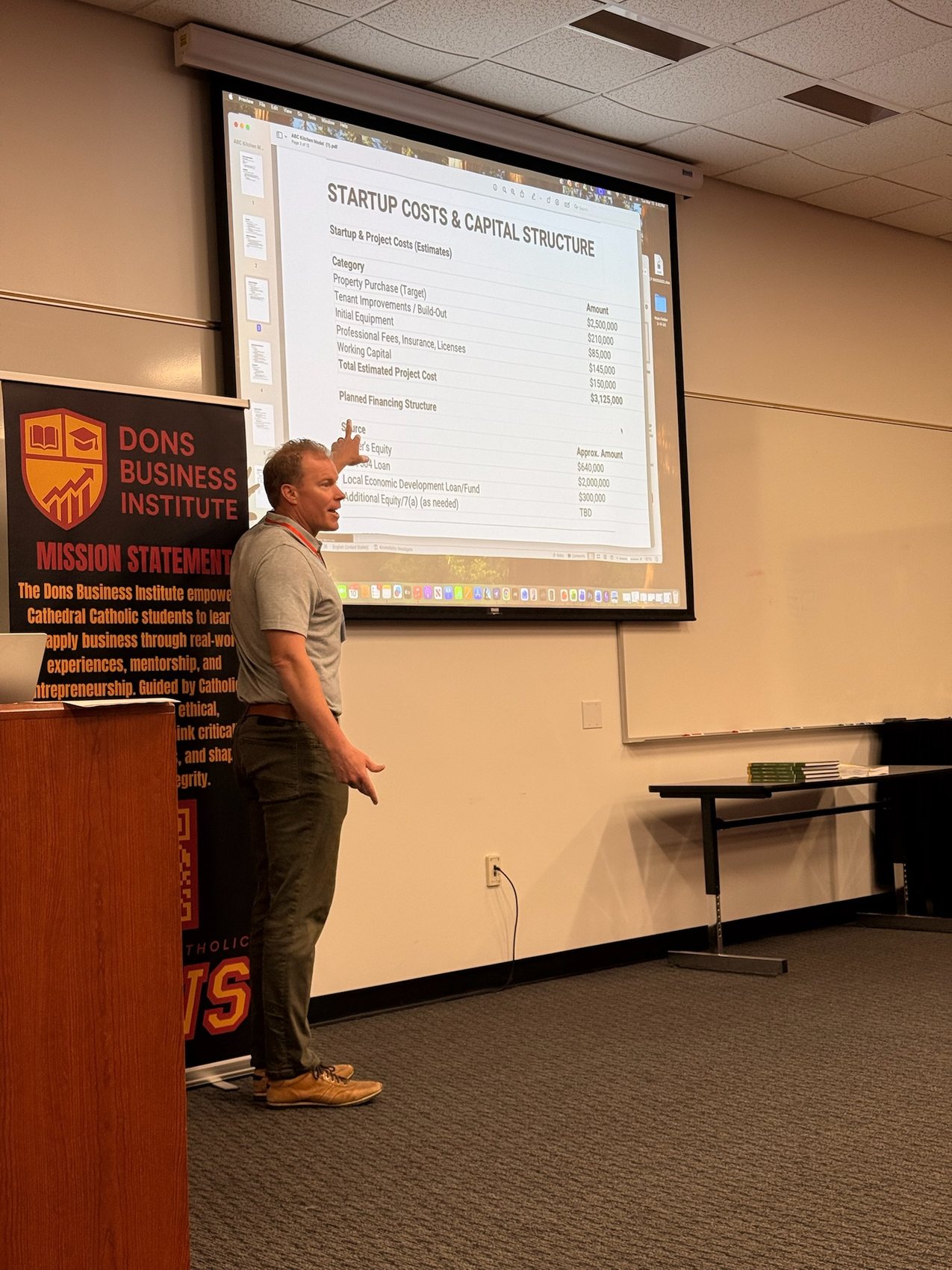
    Adam Seery pointing to a startup costs and capital structure slide beside the DBI mission banner.
    Adam Seery, walking the room through startup costs & capital structure — a real financing model, line by line.
  5. Spring · Session 03

    What Every Investor Needs to Hear

    Investors bet on people, not just ideas.

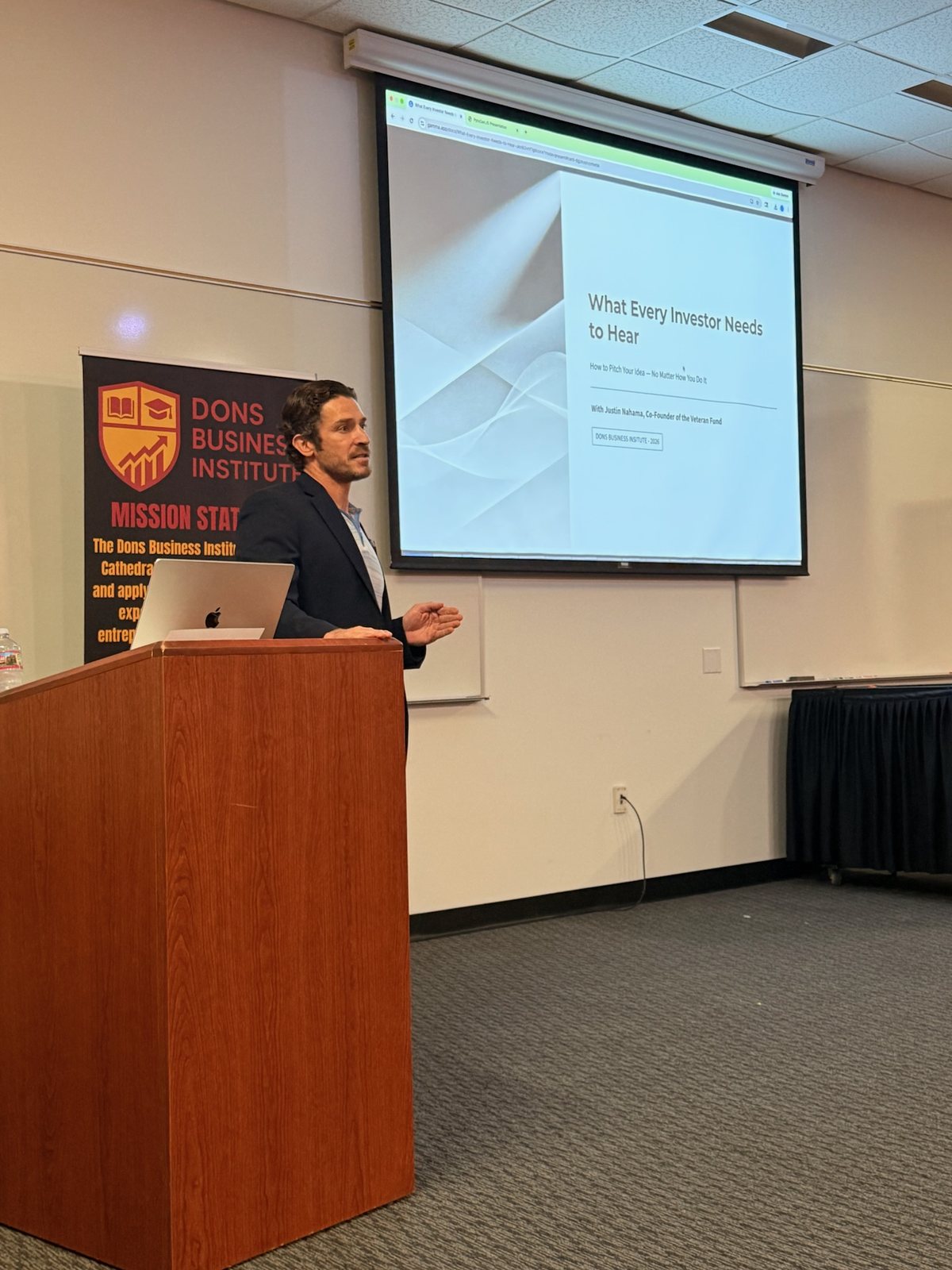
    Justin Nahama, co-founder of The Veteran Fund, broke down the twelve things every great pitch covers — jockey versus horse, traction, the ask. Then Lorens Attisha, founder & CEO of Soapy Joe’s, told the whole arc: candy at 10, the family business at 14, an abandoned car wash at 18 — 27 locations today.

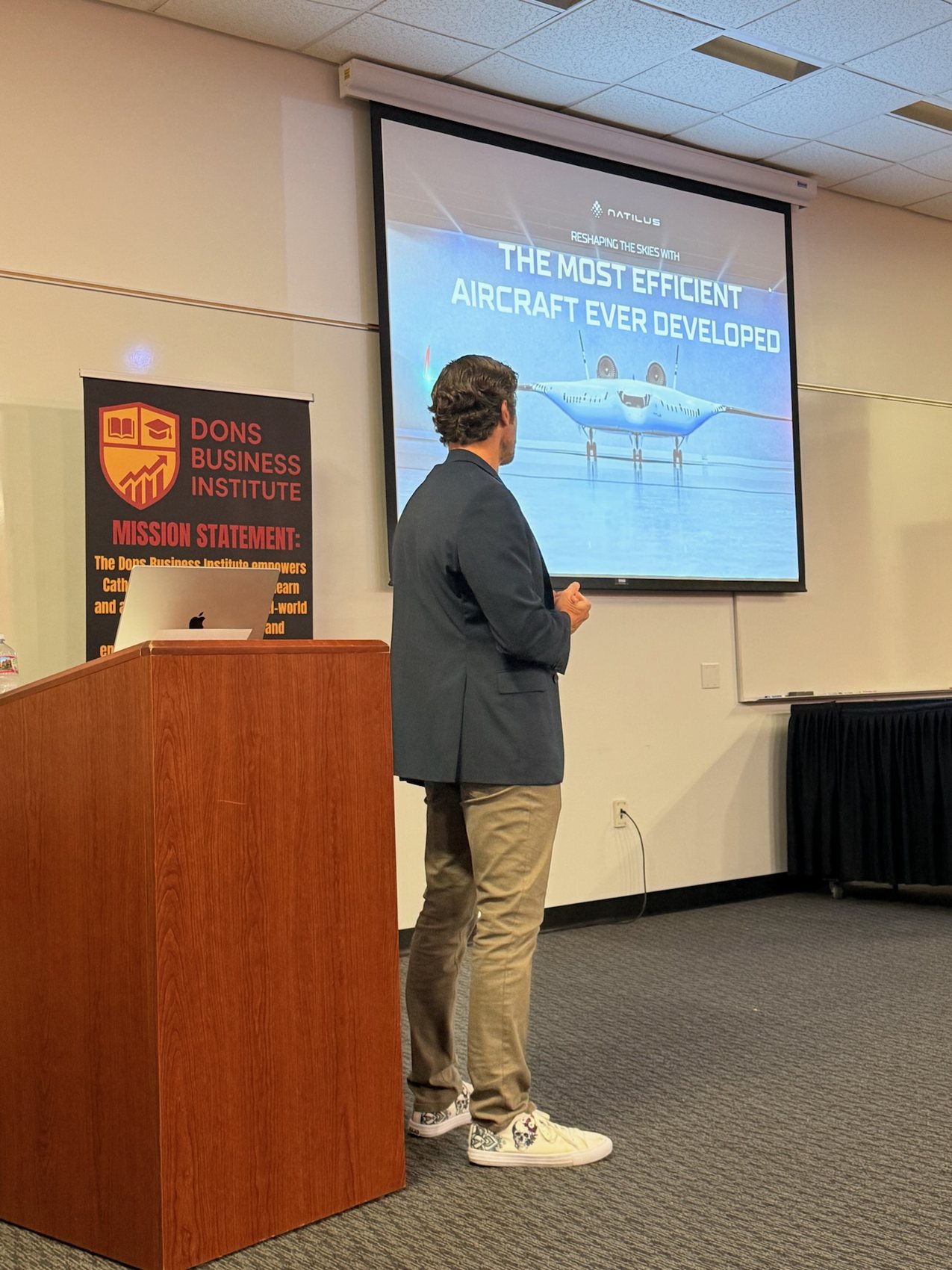
    Justin Nahama presenting the Natilus pitch deck, a blended-wing aircraft on the screen.
    Nahama walking through the real pitch deck of Natilus — a company his fund backed.
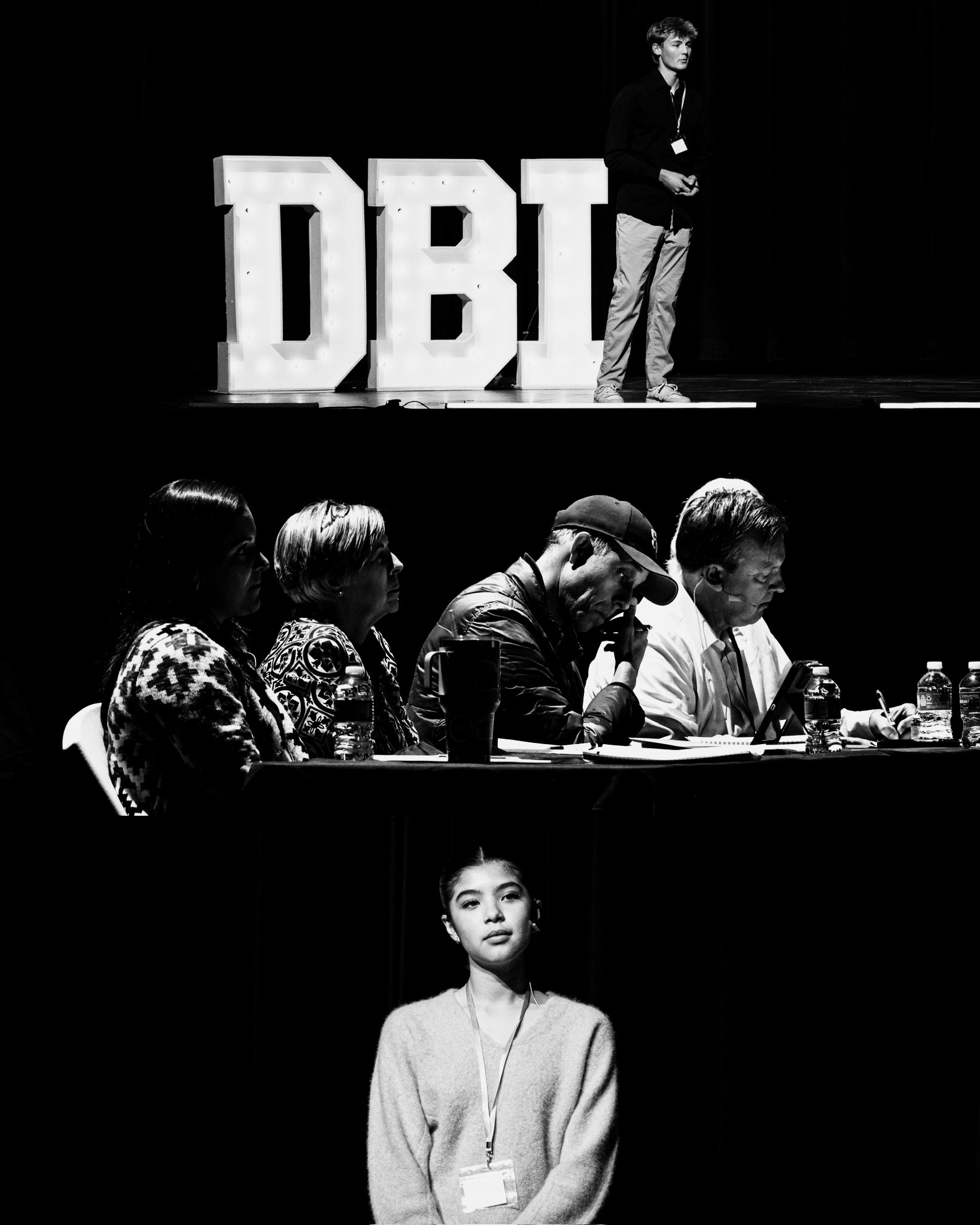
Marquee letters spelling DBI glow on a dark stage above a panel of judges taking notes.

19 May 2026

The Dons Startup Summit

Ten student companies pitched to a panel that included a former co-head of distressed investing at Blackstone, the founding partner of a venture fund whose portfolio has raised over half a billion dollars, and a founder who has moved $1.8 billion in commercial real estate. Nineteen students. One night. Everyone’s family in the room.

  1. First

    Uji Energy

    Joey Orabona · Charlotte Bahk

    A clean, plant-powered energy bar built for sustained focus without the crash.

  2. Second

    DietLabs

    Drew Dawson

    An AI nutrition platform for young adults that doesn’t make food feel like homework.

  3. Third

    PurposeForge

    Avery Shepard · Poppy Namazy · Emilia Hashemi

    College planning, started earlier, with less last-minute panic.

People’s Choice

Not the judges’ call. The room voted, live, by QR code.

R&R Threads

Roma Schwarz · Rebecca Kalkin

Custom apparel built around memories you can actually wear, linked by QR.

$19,000in prizes awarded
10student companies
19student founders
4awards, including People’s Choice

Prizes were real: shadowing days, M5 Macs, AI-enabled MacBook Pros. Students left able to keep building their companies on their own — with the hardware to do it.